
Things to Do in Colombia in February
February weather, activities, events & insider tips
High Season · Book Early
February Weather in Colombia
Long-run averages for February in Bogota
68°F (20°C)
High Temp
45°F (7°C)
Low Temp
2.0 inches (51 mm)
Rainfall
80%
Humidity
8
Rainy Days
16
Sunny-Day UV
⚠ Extreme solar radiation at altitude across the Colombian Andes. Bogota's equatorial latitude combined with its 2,640-metre (8,661-foot) elevation produces intense UV exposure that burns unprotected skin within thirty minutes, even on overcast days when the air feels cool. Reapply sunscreen constantly. Wear a hat above 2,000 metres (6,562 feet) without exception.
⚠ Altitude sickness is a genuine and underestimated risk for travelers flying directly into Bogota from sea level. Symptoms include headache, nausea, fatigue, and insomnia, typically peaking twelve to twenty-four hours after arrival. Ascending further to hike Monserrate or the surrounding paramo without acclimatizing first pushes discomfort into potential medical territory.
⚠ Brief but intense afternoon thunderstorms can strike the Andean highlands even during February's dry season, occasionally accompanied by hail in Bogota. These storms pass in under thirty minutes but can strand you without shelter on exposed trails or hilltops if you begin a hike too late in the day. Start morning activities early. Plan to be indoors or under cover by mid-afternoon.
Is February Right for You?
Weigh the advantages and considerations before booking
Advantages
- + February sits dead center in Colombia's dry season across the Andean highlands and Caribbean coast. Bogota averages just 2.0 inches (51 mm) of rain for the month. Cartagena and Santa Marta see even less. Hiking trails in the Cocora Valley stay firm underfoot. Bogota's mountaintop views from Monserrate stay clear past noon. The colonial plazas of Cartagena stay walkable without dodging downpours. April brings 4.6 inches (117 mm) to Bogota. The difference in how a trip feels is not subtle.
- + Barranquilla's Carnival lands in early February 2027. It is UNESCO-recognized. It is the second-largest carnival on earth after Rio. Four days of cumbia parades, marimonda costumes, and the Batalla de Flores float procession through the Via 40 bring over a million people into the streets. This is Colombia at its most unfiltered. There is no equivalent experience on any other month's calendar.
- + The Coffee Triangle's harvest season is underway in February. Finca visits near Salento and Filandia mean watching the full cherry-to-cup process in real time. You will not be looking at dormant plants. The mild highland weather, around 22-26°C (72-79°F) during the day, keeps the hillside walks pleasant. The drying patios are loaded with beans at every farm you visit. The smell of fresh pulp fermenting in concrete tanks is sharp and yeasty. Nothing like the finished product.
- + Caribbean diving visibility peaks in February. Waters around the Rosario Islands and Isla Baru clear to 20-30 metres (65-100 feet). They hold steady near 27°C (81°F). The dry-season calm means fewer cancelled boat trips. Reef conditions run cleaner than any month between April and November.
Considerations
- − February is firmly high season. The pressure is sharpest in Cartagena. The walled city's narrow streets fill with international visitors. Accommodation in the Centro Historico fills weeks in advance. Prices across the Caribbean coast run noticeably above the annual average. Popular restaurants in Getsemani may require reservations. You would never need them in September or October.
- − Bogota sits at 2,640 metres (8,661 feet) above sea level. Travelers flying in directly from sea level routinely underestimate how altitude affects energy, sleep, and appetite for the first 24 hours. February's cool nights, dropping to around 7°C (45°F), compound the discomfort. Spending a full day acclimatizing before tackling anything strenuous is a physiological requirement. Not a suggestion.
- − The Pacific coast and Amazon basin are deep in wet season during February. Heavy daily rainfall makes overland travel unreliable. River access becomes unpredictable. If Leticia's jungle lodges, the Choco rainforest, or whale watching off Nuqui are the reason you are coming, February is the wrong month. Colombia's geography splits its climate dramatically. A plan built for one coast collapses on the other.
Best Activities in February
Top things to do during your visit
Colombia in February hits the sweet spot of dry season, across the highland spine running from Bogotá south through the Eje Cafetero. Afternoon highs hover around 68°F and nights drop to a cool 45°F in the capital and surrounding cordillera, with roughly two inches of rain across the month, far less than the downpours that soak March through May. Along the Caribbean coast, where Cartagena and Santa Marta anchor the tourist corridor, the air carries the dry warmth of the trade winds, and mornings break with pale gold light over flat water. This is when Colombia's weather rewards travelers who want to hike cloud forests without slogging through mud, explore colonial plazas without dodging afternoon storms, and eat outdoors without humidity pressing down on every meal. February falls between the holiday crush of December and January and the Easter increase of March and April. Colombia's airports, hostels, and tour operators are busy but not overwhelmed. In the coffee zone, farmers are harvesting the mitaca crop in some lower elevations, and the terraced hillsides glow a deep, saturated green from earlier rains. On the coast, fishing boats haul in red snapper and sierra mackerel at dawn, and the smell of fried plantain and coconut rice drifts from food stalls by mid-morning. Safety across well-traveled corridors has improved markedly in recent years, and Colombia's main cities and tourist regions, Bogotá, Medellín, Cartagena, the coffee triangle, operate with infrastructure that makes independent travel straightforward: reliable domestic flights, well-maintained intercity buses, and a deep bench of locally operated tours and transfers. Visa requirements for most Western passport holders are simple. Many nationalities receive a stamp on arrival for stays up to 90 days, though confirming current entry rules before departure is always worth the five minutes. What makes Colombia singular among South American destinations is the compression of ecosystems into a country the size of Texas and California combined. In a single week in February you can stand on a Caribbean beach where warm turquoise water laps at white sand, ride a jeep into cloud forest where hummingbirds the size of your thumb feed on heliconias, and walk the graffiti-lined streets of Bogotá's La Candelaria while the smell of fresh aguapanela, hot sugarcane water with lime, curls from corner vendors. The food alone justifies the trip: arepas stuffed with egg in the highlands, ceviche spiked with coconut milk on the coast, and everywhere the dark, fruity coffee that Colombia's reputation is built on.
Coffee, Cocoa, and Waterfall Tour
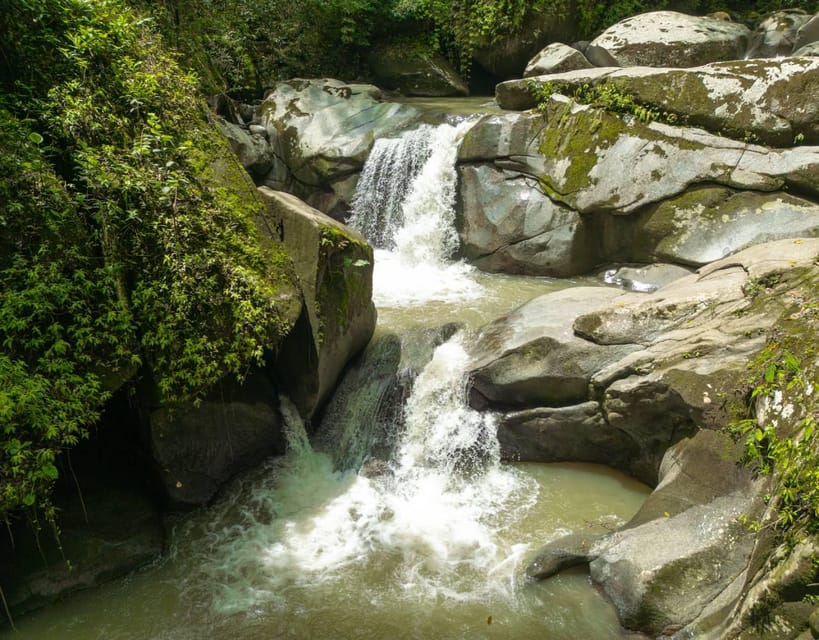
guided_experienceThe Coffee, Cocoa, and Waterfall Tour pulls you into the agricultural heart of Colombia, where steep hillsides planted with shade-grown arabica give way to cacao groves and cold mountain streams. You walk among coffee plants heavy with red cherries, watch the wet-processing method that separates pulp from bean, and taste freshly roasted coffee minutes after it comes off the drum, the flavor is bright, citric, nothing like the stale supermarket version. The tour threads through to a waterfall where mist rises off the rocks and the sound of falling water drowns out everything except the occasional call of a turpial.
This is where you understand why Colombian coffee tastes the way it does, standing at the source, watching the entire chain from cherry to cup in a single morning.
Insider tip: Wear shoes with grip and bring a dry shirt in a ziplock bag. The trail to the waterfall is steep and the spray soaks everything within ten meters of the cascade.
This month: February's low rainfall means trails to the waterfall are firm and the creek crossings stay ankle-deep rather than knee-high, which is not guaranteed later in the wet months.

The Howling Trail Hike
adventureThe Howling Trail Hike earns its name after dark. But even in daylight Colombia's highland forests deliver something raw. The route climbs through dense vegetation where bromeliads cling to every trunk, the air smells of damp earth and decomposing leaves, and howler monkeys, the source of the trail's name, produce a guttural, resonant roar that carries for over a kilometer through the canopy. The terrain is physical: elevation changes, root-tangled paths, and sections where you scramble over moss-slicked boulders with nothing but the sound of your own breathing and distant birdcall.
This is Colombia's wilderness stripped of polish, no handrails, no gift shops, just primary forest and the kind of quiet that makes your ears ring when the howlers stop.
Insider tip: Start hydrating the day before and bring electrolyte tablets. The elevation gain is real, and the humid forest air makes you sweat more than you expect even in February's moderate temperatures.
Minca Coffee, Cocoa, and Waterfall Full-Day Trip
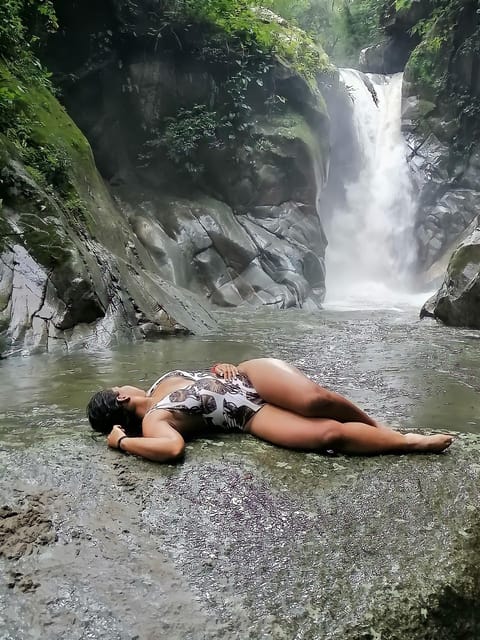
day_tripThe Minca Coffee, Cocoa, and Waterfall Full-Day Trip takes you into the foothills of the Sierra Nevada de Santa Marta, where Colombia's coastal heat gives way to the cooler, wetter air of a mountain village that sits barely above the tree line of a different climate zone. Minca itself is small, a handful of dirt roads, open-air restaurants serving fresh fruit juice with condensation beading on the glass, and the constant background hum of insects in the surrounding jungle. The tour moves from a working coffee finca where you roast beans over a wood fire and grind them by hand, to a cacao farm where you taste raw nibs that are bitter and tannic before they become chocolate, and finally to the Pozo Azul or Marinka waterfalls, where the water runs cold and clear enough to see rounded stones on the bottom.
Minca compresses the sensory range of Colombia's agricultural heritage into a single day, the sharp bite of raw cacao, the sweet acidity of mountain-grown coffee, and the shock of cold waterfall water after a humid jungle walk.
Insider tip: Request the Marinka waterfall if given a choice. It draws fewer visitors than Pozo Azul, and the swimming hole at the base is deeper and more shaded in the afternoon.

Cartagena Efoil FliteBoard Baru con transport y daypass
otherThe Cartagena Efoil FliteBoard Baru experience puts you on an electric hydrofoil board in the turquoise shallows off Barú, the peninsula south of Cartagena where the water shifts from green to blue depending on the sand beneath it. The efoil lifts you above the surface on a submerged wing, and once you find your balance the sensation is unlike surfing or wakeboarding, it is silent, smooth, and fast, with nothing but the hiss of air and warm salt spray on your skin. The trip includes transport from Cartagena through the fishing villages along the coast, where you pass stands selling fried fish wrapped in banana leaves and catch the smell of coconut oil and charcoal smoke from roadside grills.
This is the Caribbean without an engine, silent flight over clear water, with Barú's undeveloped coastline as the backdrop instead of a marina.
Insider tip: The board has a learning curve. Expect to fall repeatedly in the first twenty minutes. Wear a rash guard to avoid chafing from the life vest, and ask the instructor to start you in the shallows where the water is warmest and the falls are soft.
This month: February's dry, settled weather on Colombia's Caribbean coast means flat water conditions are more consistent than during the transitional months when afternoon squalls can chop up the surface.

Cartagena Food Adventure: 10 Dishes, Street Food & Sit-Down stops
foodThe Cartagena Food Adventure walks you through ten dishes across the old walled city and Getsemaní, alternating between street-food stalls where smoke curls off cast-iron plancha griddles and sit-down stops where ceiling fans turn slowly above tiled floors. You eat arepas de huevo, fried corn pockets with a whole egg sealed inside, the shell cracking to reveal a runny yolk, and taste cocadas, coconut candies that are gritty-sweet and sticky in the heat. The route threads through narrow streets where balconies sag under the weight of bougainvillea, past fruit vendors whose carts are stacked with lulo, guanábana, and maracuyá in colors so saturated they look artificial.
Cartagena's food scene is best understood on foot and at speed, eating what locals eat where they eat it, with someone who can explain why the same arepa tastes different in every neighborhood.
Insider tip: Skip breakfast entirely before this tour. Ten dishes across several hours is a serious volume of food, and the portions at the sit-down stops are generous enough to be meals on their own.

Private Airport Transfer to Hotel or viceversa
transportThe Private Airport Transfer to Hotel service covers the ride between Cartagena's Rafael Núñez International Airport and your accommodation, whether that is inside the walled city, in Bocagrande, or along the coast toward La Boquilla. The vehicle is air-conditioned and the driver handles the chaotic merge onto the Avenida Pedro de Heredia, where taxis, buses painted in every color, and motorcycle couriers weave through traffic with a honking, exhaust-tinged choreography that is distinctly Colombian. For travelers arriving on late flights or carrying dive gear and oversized luggage, the fixed-rate private transfer removes the negotiation that Cartagena's taxi rank otherwise requires.
After a long flight into Colombia, a pre-arranged ride with a driver who already knows your hotel address turns the most stressful thirty minutes of any trip into a non-event.
Insider tip: Confirm your hotel's exact entrance location with the driver before departure, several walled-city hotels sit on pedestrian-only streets, and the closest vehicle drop-off point can be a five-minute walk with luggage over uneven cobblestones.
Where to Stay in Colombia in February
Hand-picked hotels across price tiers for February travellers.

Packing Checklist
Bookmark this page — your progress is saved between visits
Need the full list with shopping links?
Climate-specific gear, brand recommendations, and what to leave at home.
View Colombia Packing List →Essential Tips
Insider knowledge and common pitfalls to avoid
Insider Knowledge
Bogota's altitude will humble you on day one, and the standard response to that warning is to ignore it. Do not. Spend your first afternoon walking slowly through La Candelaria's colonial streets and the Museo del Oro rather than anything that raises your heart rate. Drink agua de panela, the warm sugarcane water that street vendors sell in paper cups. It tastes like liquid brown sugar with a squeeze of lime, and locals swear it helps the altitude headache. Whether that is placebo or biochemistry, it takes the edge off and costs almost nothing.
Play tejo at least once. Colombia's national sport involves hurling a metal disc at a clay target packed with small gunpowder packets, and when you hit one, it explodes with a sharp crack that makes everyone in the court cheer. Bogota has several dedicated tejo bars in the Chapinero neighbourhood where the game comes with cold beer and the rules are loose enough that beginners compete on equal footing. The sulfur smell, the thud of metal into wet clay, the involuntary flinch when the packet detonates. Nothing else in Colombia replicates this particular sensory cocktail.
At the fruit stalls in Paloquemao market in Bogota or Minorista market in Medellin, point at everything you do not recognise and the vendors will cut you a sample. February's dry weather puts most varieties at peak supply: lulo, which tastes like a cross between lime and rhubarb; guanabana, whose white flesh is creamy and faintly sour; uchuva, the tart golden berry still in its papery husk. And feijoa, which smells like perfume and tastes like nothing you can compare to anything back home. Colombian fruit variety is staggering. Most of it never crosses a border.
Colombians eat their main meal at lunch, not dinner, and the almuerzo corriente, the set lunch offered at nearly every neighbourhood restaurant, is the single best-value meal in the country. It typically includes a soup starter, a protein with rice and red beans, fried plantain, a small salad, and a glass of fresh fruit juice, and the total cost makes international visitors double-check the bill. Look for the handwritten signs on cardboard propped outside small storefronts rather than anything with an English-language menu. Trust the locals.
Avoid These Mistakes
Pack for tropical heat alone and you will arrive in Bogota at 9 PM in shorts and sandals, then shiver through your first night wondering what went wrong. Colombia climbs from sea level to nearly 3,000 metres (9,843 feet) within hours of driving, and the temperature gap between Cartagena's 31°C (88°F) and Bogota's 7°C (45°F) nights can wallop you on the same calendar day. Check every city's elevation. Pack for each one separately.
Trying to cover Bogota, Medellin, Cartagena, the Coffee Triangle, and a beach in one week. Domestic flights connect the dots in under an hour each. But the altitude swings, climate shifts, and cultural differences between regions will exhaust you and leave you with nothing. Two cities in seven days. Three in ten. That is the honest maximum if you want to eat properly, walk the neighbourhoods, and leave with more than a blur of rushed selfies.
Skipping Bogota because someone called it cold and grim. The capital has changed dramatically. Its food culture, concentrated in Chapinero and La Macarena in restaurants that have spent decades refining Colombian ingredients, is arguably the most evolved in the country. La Puerta Falsa, operating continuously since 1816 in the shadow of the cathedral on the Plaza de Bolivar, still serves the definitive ajiaco bogotano. The three-potato chicken soup layered with corn, capers, cream, and avocado defines the city's kitchen. The cool February air is a relief after days on the Caribbean coast. Not a downside.
Ready to plan your trip to Colombia?
Now that you've got the research covered, here's where to go next.
Explore More Activities in Colombia
Didn't see anything interesting yet?
Browse Viator's full catalog of tours, day trips, food experiences, and private guides in Colombia.
See All Colombia Tours on Viator