Things to Do in Colombia in November
November weather, activities, events & insider tips
Low Season · Budget Friendly
November Weather in Colombia
Long-run averages for November in Bogota
66°F (19°C)
High Temp
47°F (8°C)
Low Temp
4.2 inches (107 mm)
Rainfall
83%
Humidity
10
Rainy Days
14
Sunny-Day UV
⚠ Heavy rain in the Andean highlands can trigger landslides that close mountain roads for hours or occasionally days. Check road conditions before booking overland travel between Bogota and the Coffee Region or Medellin. Consider domestic flights as a more reliable alternative during November's wetter stretches. The mountains do not negotiate.
⚠ Bogota's elevation at 2,640 m (8,661 ft) can cause mild altitude sickness in travelers arriving directly from sea level. Headaches, shortness of breath on stairs, and fatigue are common for the first day or two. This is true if you head straight to Monserrate or try to walk La Candelaria's steep hills before acclimatizing. Take it slow. The city can wait.
Is November Right for You?
Weigh the advantages and considerations before booking
Advantages
- + Cartagena's Fiestas de Independencia erupt around November 11. Champeta music thunders from sound systems the size of small cars. Parade floats roll through the walled city. All-night street dancing in Getsemani follows. No tourist-facing event can replicate this. Colombia celebrates itself here. You happen to be invited.
- + Shoulder season pricing sits well below the December through January peak. Accommodation across Bogota, Medellin, and the Caribbean coast proves noticeably easier to book. Your budget will thank you. The holiday rush has not started yet. Most travelers from North America and Europe remain at home.
- + The principal coffee harvest, the cosecha principal, peaks across the Zona Cafetera in October and November. Fincas around Salento, Filandia, and Manizales are actively picking and processing. You will smell fermenting coffee cherry before you see the drying beds. The cup you taste at origin will ruin every airport espresso afterward. Worth the trip.
- + The Caribbean coast begins its slow turn toward dry season by late November. Cartagena's downpours space out. Afternoons clear earlier. The ocean stays warm. The air carries salt and frangipani. Beaches north toward Baru start to feel navigable again. Skip the 3 PM washout.
Considerations
- − Bogota and the Andean highlands catch the tail end of the second rainy season. Roughly 10 days of measurable rain and 107 mm (4.2 inches) fall, mostly in sharp afternoon bursts. Hikes to places like Monserrate or the paramos can get fogged out without warning. Pack a solid backup plan.
- − Mountain roads between cities face occasional closures from mudslides after heavy rain. The winding stretches linking Bogota to the Coffee Region or Medellin to the Pacific coast are vulnerable. Bus journeys that should take eight hours sometimes stretch to twelve. Domestic flights become worth the premium.
- − Bogota's 83% humidity at 2,640 m (8,661 ft) elevation makes that 8 degrees C (47 degrees F) low feel bone-deep. Travelers expecting tropical warmth get surprised. The city has almost no central heating. Budget accommodations can feel cold after dark. Pack layers.
Best Activities in November
Top things to do during your visit
Colombia in November arrives wrapped in warm afternoon rain. The second rainy season is tapering but not yet spent. Expect cloud banks to roll across the Andes each afternoon, dropping short, decisive showers that clear by early evening. Bogotá's brick facades turn slick and gleaming under streetlights. Highs hover around 19°C and lows dip to about 8°C in the highland cities. Cool enough for a light jacket after dark. Warm enough to walk all day in shirtsleeves. Along the Caribbean coast, Cartagena and Santa Marta are hotter and steamier, with the trade winds just beginning to stir ahead of the dry season. The countryside is green. Coffee cherries are ripening on Zona Cafetera hillsides. The rivers feeding Sierra Nevada waterfalls run full and loud. November sits in a seasonal seam. The crush of high-season visitors, December through February, has not yet arrived. Colombia's marquee experiences feel less competed-for: smaller groups on coffee tours, emptier trails in the cloud forest, shorter waits at Cartagena's walled-city restaurants. Colombians themselves are in a practical mood, finishing the work year, stocking up for the Novenas and holiday gatherings ahead. In Bogotá, the Candelaria neighbourhood smells of ajiaco simmering in corner kitchens and fresh-baked almojábana from bakeries whose ovens never cool. On the coast, fishermen haul in red snapper and sierra at dawn while pelicans wheel overhead. The first dry-season breezes carry the salt-and-diesel tang of the harbour into the old town's narrow lanes. It is a month for travellers who want Colombia unvarnished. Its food is hotter. Its landscapes are lusher. Its people are unhurried by tourist calendars.
Coffee, Cocoa, and Waterfall Tour
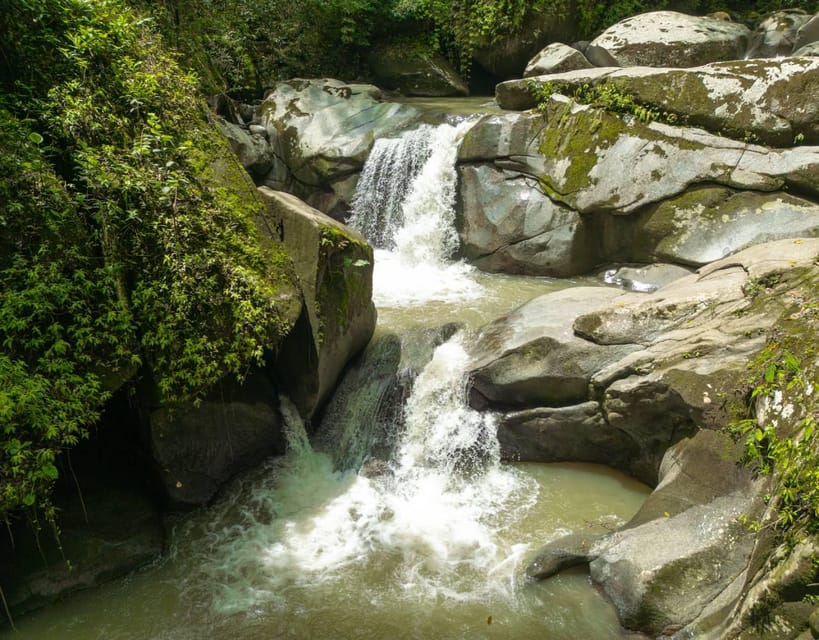
guided_experienceThe Coffee, Cocoa, and Waterfall Tour drops you into the agricultural spine of Colombia's Eje Cafetero, where Arabica plants grow in volcanic soil under the filtered shade of plantain trees. You pick ripe coffee cherries yourself. Split them open to smell the sweet ferment of the mucilage. Then watch the pulping, washing, and sun-drying stages while a local farmer explains how altitude and varietal shape the cup you drink at home. The tour continues to a small-batch cacao operation, earthy, slightly bitter raw nibs crushed on a stone metate, before ending at a waterfall whose mist you feel on your forearms from twenty metres away. The roar fills the valley so completely that the guide has to shout.
You taste the full seed-to-cup chain of Colombian coffee at its source, standing on the hillside where the plant grew.
Insider tip: Wear shoes with aggressive tread. The trail to the waterfall is red clay that turns slick after the afternoon rains that are near-daily in November.
This month: November rainfall keeps the waterfall at full volume, a noticeably more dramatic cascade than visitors see during the drier months of January or February.

The Howling Trail Hike
adventureThe Howling Trail Hike earns its name after dark. But the daytime rewards are just as sharp. The route climbs through dense cloud forest where the canopy drips condensation onto mossy trunks and the air tastes cool and vegetal, that green, almost mushroom scent of decomposing leaf litter at altitude. Howler monkeys announce themselves long before you spot them: a guttural, resonant bellow that seems to come from everywhere at once, vibrating in your sternum. The trail itself threads between old-growth ceiba trees, crosses wooden footbridges over tea-coloured streams, and opens onto ridge viewpoints where the Andes develop in layered grey-green ridges under shifting cloud.
This is one of Colombia's most immersive cloud-forest hikes, where the wildlife soundtrack alone, howlers, toucans, the crack of breaking branches, justifies the climb.
Insider tip: Bring a dry bag for your phone and a packable rain shell. Even if the morning starts clear, cloud forest trails generate their own moisture, and November amplifies it.
This month: The wet conditions in November keep the forest canopy at peak density and the streams running high, which draws more wildlife to lower elevations where hikers can observe them.
Minca Coffee, Cocoa, and Waterfall Full-Day Trip
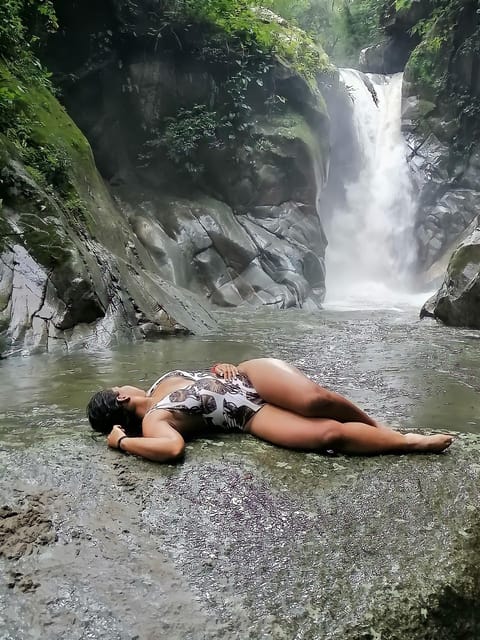
day_tripThe Minca Coffee, Cocoa, and Waterfall Full-Day Trip leaves the Caribbean heat of Santa Marta behind within thirty minutes, climbing into the foothills of the Sierra Nevada where the temperature drops noticeably and the soundscape shifts from honking mototaxis to the screech of parakeets. Minca itself is a small settlement clinging to a green hillside. The tour moves between a working coffee finca, where you roast your own small batch over a wood fire, the beans crackling and releasing that caramel-edged smoke, a cacao garden where you grind nibs into a rough paste and taste it still warm, and a jungle waterfall pool cold enough to make you gasp. The water is clear, falling over dark basalt into a basin ringed by giant ferns.
Minca compresses Caribbean coast, mountain cloud forest, and agricultural Colombia into a single day, all within striking distance of Santa Marta.
Insider tip: The swimming hole below Pozo Azul fills with day-trippers by noon. Arrive before ten to have the pool largely to yourself and feel the spray on your skin without jostling for space.

Cartagena Efoil FliteBoard Baru con transport y daypass
otherThe Cartagena Efoil FliteBoard Baru con transport y daypass puts you on a hydrofoil board off the Barú peninsula, skimming above the warm Caribbean surface with nothing but turquoise water below and a line of mangroves on the horizon. The sensation is closer to flying than surfing. The board lifts silently onto its foil, and suddenly the chop vanishes, replaced by a smooth, hovering glide. An instructor runs you through the controls on the beach first, then wades out with you until you find your balance. The day pass includes time on the white-sand beach at Playa Blanca, where coconut vendors crack the fruit with a machete and the sweet water inside is still cool from the shade.
Efoiling off Barú is the Caribbean's quietest thrill. No engine noise, no wake, just you levitating over translucent water with Cartagena's skyline shrinking behind you.
Insider tip: If you have never efoiled, request the beginner board with the larger wing. It lifts at lower speed and forgives wobbly balance, and the instructors carry both sizes.

Cartagena Food Adventure: 10 Dishes, Street Food & Sit-Down stops
foodThe Cartagena Food Adventure: 10 Dishes, Street Food and Sit-Down stops walks you through the walled city and Getsemaní with a local guide who knows every cart, counter, and hole-in-the-wall by the cook's first name. You start with arepas de huevo, cornmeal pockets deep-fried until the shell crackles, the egg inside still slightly runny, bought from a woman whose cast-iron pot has occupied the same corner for decades. The route threads past fruit vendors selling lulo, maracuyá, and zapote, each one sliced open for you to taste: tart, floral, and cloyingly sweet in turn. Sit-down stops bring ceviche de camarón dressed in lime and coconut milk, a plate of posta negra whose slow-cooked beef carries the dark sweetness of panela, and a final coconut rice paired with fried red snapper whose skin shatters audibly between your teeth.
Ten dishes in three hours maps Cartagena's food culture from street cart to family kitchen, and every bite comes with the name of the cook and the story behind the recipe.
Insider tip: Skip breakfast entirely. The portions are generous and cumulative, and you will want stomach room for the coconut lemonade and buñuelos that close the tour.

Private Airport Transfer to Hotel or viceversa
transportThe Private Airport Transfer to Hotel or viceversa strips the arrival friction out of reaching your Colombian accommodation, useful in cities like Bogotá or Cartagena where taxi negotiation at the kerb can be tense for newcomers. A driver meets you at arrivals with a sign, handles luggage, and delivers you door-to-door. The vehicle is air-conditioned, a relief on the Caribbean coast, where the walk from terminal to taxi rank alone leaves your shirt damp. The driver typically knows the current road conditions, which in November can include waterlogged underpasses on Bogotá's northern corridors after heavy afternoon rain.
A private transfer eliminates the single most stressful moment of arriving in an unfamiliar Colombian city, after an overnight flight.
Insider tip: Confirm your hotel address in writing with the driver before departure. Several Cartagena hotels inside the walled city sit on streets too narrow for cars, and knowing the nearest drop-off point in advance saves circling.
Where to Stay in Colombia in November
Hand-picked hotels across price tiers for November travellers.

Public Holidays in November
Dates that affect opening hours, transport and crowds
Dia de los Santos
Known in English as All Saints' Day. Observed nationwide as a public holiday.
Independencia de Cartagena
Known in English as Independence of Cartagena. Observed nationwide as a public holiday.
Dia de los Santos
Known in English as All Saints' Day. Observed nationwide as a public holiday.
Independencia de Cartagena
Known in English as Independence of Cartagena. Observed nationwide as a public holiday.
Dia de los Santos
Known in English as All Saints' Day. Observed nationwide as a public holiday.
Packing Checklist
Bookmark this page — your progress is saved between visits
Need the full list with shopping links?
Climate-specific gear, brand recommendations, and what to leave at home.
View Colombia Packing List →Essential Tips
Insider knowledge and common pitfalls to avoid
Insider Knowledge
The real meal in Bogota is the almuerzo corriente, the set lunch every neighborhood restaurant offers between noon and 2 PM. You get a soup course, a main plate heaped with rice, beans, meat, fried plantain, and a fresh juice. All at a fraction of what tourist-facing restaurants charge for the same food with worse seasoning. Follow the construction workers to find the best ones. They have already done the research.
Domestic flights between Bogota, Medellin, and Cartagena are often cheaper than the bus. They save you six to twelve hours of mountain roads that November rain makes unpredictable. Book two to three weeks ahead for the best fares. Always check whether the price includes checked luggage. Most Colombian budget carriers charge separately.
Colombians eat their main meal at lunch, not dinner. The best food at the best value shows up midday. Dinner at a sit-down restaurant is well fine. You are paying more for a quieter kitchen working with what is left from the lunch rush. Shift your eating schedule to match. Your meals will improve immediately.
In the Coffee Region, the old Willys jeeps that serve as rural buses leave from the main plaza in towns like Salento when they are full, not on a fixed schedule. Showing up early means a shorter wait. The front seat next to the driver offers views of the valley that the packed rear bench does not. The ride itself, diesel exhaust and cumbia on the radio and hairpin turns over green valleys, is half the experience of being in Colombia's countryside.
Avoid These Mistakes
Packing only for tropical heat and arriving in Bogota at 2,640 m (8,661 ft) elevation shivering in shorts and sandals is a common mistake. The capital feels more like a cool spring day in Northern Europe than the Caribbean beach vacation many first-timers expect. November nights with that highland humidity cut through thin clothing. Dry cold at the same temperature would not.
Trying to see Bogota, Medellin, Cartagena, and the Coffee Region in a single week is a mistake. Colombia is geographically enormous. The distances between these cities eat time even with flights. Two regions in a week is realistic and enjoyable. Four is a blur of airports and overnight buses where you never stay anywhere long enough to feel the rhythm of the place or eat at the same stall twice.
Dismissing Medellin's food because you have heard Cartagena is Colombia's food city is shortsighted. Medellin's bandeja paisa, the plate-sized platter of beans, rice, chicharron, plantain, avocado, arepa, chorizo, and ground beef, is one of Colombia's defining meals. The hole-in-the-wall spots in neighborhoods like Laureles and Envigado serve it with a generosity and a pork-fat richness that no coastal ceviche can replace.
Ready to plan your trip to Colombia?
Now that you've got the research covered, here's where to go next.
Explore More Activities in Colombia
Didn't see anything interesting yet?
Browse Viator's full catalog of tours, day trips, food experiences, and private guides in Colombia.
See All Colombia Tours on Viator