Things to Do in Colombia in June
June weather, activities, events & insider tips
Shoulder Season · Good Value
June Weather in Colombia
Long-run averages for June in Bogota
66°F (18°C)
High Temp
48°F (9°C)
Low Temp
2.3 inches (58 mm)
Rainfall
84%
Humidity
15
Rainy Days
14
Sunny-Day UV
⚠ Bogotá's altitude at 2,640 m (8,661 ft) causes altitude sickness symptoms in most sea-level visitors during the first 48 hours. Headaches, nausea, and breathlessness on stairs are common. Factor this into your first two days of planning.
⚠ Equatorial UV radiation at highland altitude reaches extreme levels even on overcast days. Unprotected skin can burn within 30 minutes of exposure in Bogotá and the surrounding Andean towns. The cool air temperatures make this risk easy to underestimate.
Is June Right for You?
Weigh the advantages and considerations before booking
Advantages
- + Humpback whale season kicks off along the Pacific coast near Nuquí and Bahía Solano. Roughly 3,000 whales arrive from Antarctic feeding grounds between June and October. Early June brings calmer seas. Visibility beats the heavier rain months ahead.
- + Andean rainfall plummets from the April-May peak. Bogotá receives 2.3 inches (58 mm) in June, roughly half the 4.6 inches (117 mm) that falls in April. Highland hiking and city exploration become significantly more reliable. Skip April and May.
- + International tourist numbers dwindle between Colombia's December-February high season and July's northern-hemisphere summer rush. Shorter queues await at Bogotá's Museo del Oro. Cartagena's walled city offers more breathing room. Accommodation availability surpasses what peak months allow.
- + The Festival Folclórico y Reinado Nacional del Bambuco seizes Neiva during June's final two weeks. This is Colombia's premier folk celebration. Competitive bambuco dance troupes perform. Live rajaleña music fills the streets. Lechona vendors line the avenues. Street parades draw performers from across Huila department.
Considerations
- − Afternoon rain showers still strike the Andes highlands on roughly 15 days. They typically roll through between 2 PM and 5 PM. Most clear within the hour. Build flexibility into outdoor plans above 2,000 m (6,562 ft).
- − The Caribbean coast around Cartagena and Santa Marta pushes above 32°C (90°F). Humidity exceeds 80%. Midday exploration becomes physically punishing. The heat barely breaks after sunset. Avoid the middle hours.
- − Colombian schools break for mid-year holidays around June 15. Domestic tourism surges at Guatapé, Salento, and Caribbean beaches. Internal flight prices jump accordingly. Weekend crowds at popular day-trip destinations roughly double after mid-month. Book early.
Best Activities in June
Top things to do during your visit
Colombia in June sits at a meteorological turning point. After the heavy downpours of April and May, when rainfall often exceeds four inches across the highlands, June brings a conspicuous reprieve: precipitation drops nearly in half, averaging around two inches for the month. Daytime temperatures in the Andean interior hold steady near 18°C, cool enough that a light jacket earns its place in your bag for mornings and evenings when the thermometer dips toward 9°C. Along the Caribbean coast, where Cartagena and Santa Marta anchor Colombia's shoreline, the air thickens with salt and humidity, and the sea turns a glassy turquoise that rewards anyone willing to get on the water. The drier spell makes June one of the more comfortable windows for travel across vastly different elevations, from cloud-forest coffee farms to lowland beaches, without the persistent grey skies and muddy trails that define the wettest months. What sets Colombia apart in June is the pace. The peak tourist season has not yet arrived, and the country operates at its own internal rhythm. In the coffee-growing Zona Cafetera, pickers move through hillside rows of arabica plants, and the smell of roasting beans drifts from fincas that double as small processing stations. In Cartagena's walled Old City, the evening cool after a sweltering afternoon draws residents to doorsteps where cumbia spills from open windows and the scent of fried empanadas and grilled corn hangs in the narrow lanes. Colombia's food culture is aggressively regional: a bandeja paisa in Medellín shares almost nothing with a ceviche de camarón served quayside in Cartagena, and June's gentler weather makes it easier to eat your way through both without wilting. For travelers asking whether Colombia is safe, the practical answer is that the areas covered by organized tourism, from Bogotá's La Candelaria to Santa Marta's coastal trails, operate with well-established infrastructure, and the reduced rainfall in June means fewer disrupted roads and cancellations. Colombia's beaches draw serious attention in June. The Caribbean coast from Barú to Tayrona dries out enough for reliable day trips, and water visibility improves as runoff from the interior rivers decreases. Whether you are riding an electric hydrofoil off the Rosario Islands or hiking to a waterfall near Minca, June delivers the particular gift of a country between seasons, neither baking nor drowning, with enough cloud cover to soften the equatorial light into something a photographer would call golden for hours at a stretch.
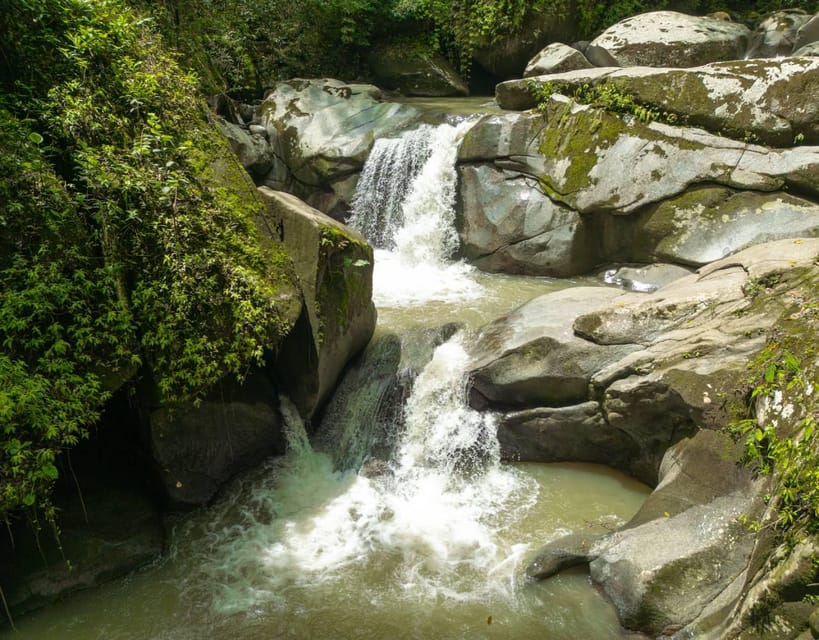
Coffee, Cocoa, and Waterfall Tour
guided_experienceThe Coffee, Cocoa, and Waterfall Tour pushes deep into Colombia's agricultural spine, where steep volcanic slopes nurture some of the world's most sought-after arabica. You will walk between rows of coffee cherries at various stages of ripeness, the waxy leaves brushing your arms as a guide explains the wet-processing method that gives Colombian beans their clean, bright acidity. The tour then shifts to a cacao demonstration where you crack open a fresh pod, the white pulp tasting faintly of lychee before it is fermented into chocolate, and finishes at a waterfall where cold mountain water crashes into a rock pool loud enough to drown out conversation.
This is the rare agricultural tour that moves beyond lecture into full sensory immersion, letting you taste coffee at every stage from cherry to cup while standing in the soil that produced it.
Insider tip: Wear shoes with real tread, not sneakers. The trail to the waterfall is steep clay that turns slick even when rain is light, and the final descent involves stepping across wet rocks.
This month: June's reduced rainfall compared to May makes the waterfall trail more passable, though the falls still run strong from accumulated wet-season flow.

Cartagena Efoil FliteBoard Baru con transport y daypass
otherThe Cartagena Efoil FliteBoard experience launches from Barú, a sandy peninsula south of Cartagena where the Caribbean shifts from murky port green to a transparent aquamarine. An efoil is an electric hydrofoil surfboard: once you find your balance, you rise above the water on a carbon-fiber wing and glide silently a foot above the surface, the only sound the faint hum of the motor and the slap of small waves beneath you. The trip includes transport from Cartagena and a day pass to the beach club, so the ride itself is bookended by hours of warm sand, the coconut-oil sweetness of sunscreen mixing with the brine of the open Caribbean.
Flying above the water on a hydrofoil, with Barú's coastline stretching behind you and nothing but open sea ahead, is a singular physical sensation that no boat ride or jet ski replicates.
Insider tip: If you have never ridden an efoil, expect to spend the first fifteen minutes falling. The learning curve is real but short, and instructors keep a close watch, so request the lesson at the start of the day pass rather than the end when fatigue sets in.
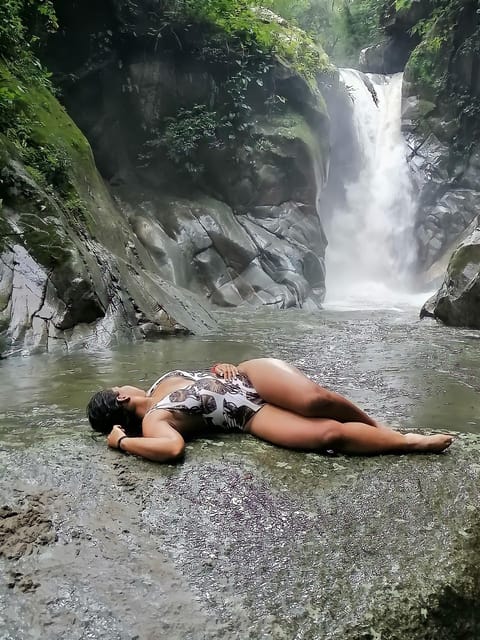
Minca Coffee, Cocoa, and Waterfall Full-Day Trip
day_tripThe Minca Coffee, Cocoa, and Waterfall Full-Day Trip heads into the foothills of the Sierra Nevada de Santa Marta, the world's highest coastal mountain range, where the town of Minca perches at roughly 600 meters above the sweltering lowlands. The temperature drops noticeably as your vehicle climbs the switchbacks from Santa Marta, and by the time you reach the first coffee farm the air carries the damp green smell of moss and decomposing leaves rather than sea salt. You taste cacao processed on-site, the bitter snap of high-percentage chocolate still warm from the stone grinder, before hiking to a waterfall where the Pozo Azul pool glows a milky blue-green from dissolved minerals.
Minca sits at the intersection of Caribbean and Andean ecosystems, and this trip compresses a striking altitude change, two agricultural tastings, and a jungle waterfall swim into a single day.
Insider tip: Bring a dry bag for your phone and wallet. The hike involves river crossings, and even in June's drier window the trail has stretches of ankle-deep water that appear without warning.

Cartagena Food Adventure: 10 Dishes, Street Food & Sit-Down stops
foodThe Cartagena Food Adventure covers ten dishes across the walled city and Getsemaní, moving from street stalls where arepas de huevo sizzle in deep oil, their corn shells cracking open to reveal a runny egg inside, to sit-down restaurants where ceviche arrives in a coconut shell with the sharp bite of lime and habanero. The route is designed to tell a story about Colombia's Caribbean coast through its ingredients: green plantain, yuca, fresh prawns pulled that morning from the bay, and the tamarind candy that locals buy by the handful from women carrying woven baskets. The guide navigates the conversation in both English and Spanish, stopping at a juice stand where you taste lulo, a fruit that looks like a small orange tomato and tastes like a sour kiwi with a citrus finish.
Cartagena's street food scene is Colombia's most concentrated and varied, and this tour sequences the flavors so each dish builds on the last rather than overwhelming with quantity.
Insider tip: Eat nothing beforehand. Ten dishes plus juices is substantial, and the final stop, a sit-down plate of grilled seafood, is large enough to serve as dinner if you pace yourself.

Private Airport Transfer to Hotel or viceversa
transportThe Private Airport Transfer to Hotel service in Colombia covers the journey between the airport and your accommodation in either direction, which in cities like Cartagena or Bogotá removes the single most disorienting moment of arrival: negotiating a taxi fare in an unfamiliar terminal while hauling luggage through crowds. The driver meets you at arrivals with a sign, loads your bags, and delivers you to the hotel door in an air-conditioned vehicle. In Cartagena specifically, the drive from Rafael Núñez Airport to the walled city passes along the waterfront where you get your first glimpse of the fortified walls, their coral-stone faces glowing amber in the low light if you arrive near dusk.
A fixed-rate private transfer eliminates the arrival-day taxi negotiation and gets you from terminal to hotel without detours, which matters most in cities where airport taxi scams are well-documented.
Insider tip: Confirm your hotel address with the driver before departing the airport, in Cartagena's Old City where one-way streets and pedestrian zones mean the drop-off point may be a different gate than the one your hotel listed.

Thursday Night Bar Crawl in Cartagena, Colombia
walking_tourThe Thursday Night Bar Crawl in Cartagena starts in Getsemaní, the neighborhood that hums loudest after dark, where reggaeton pulses from open-front bars and the sweet fermented smell of aguardiente, Colombia's anise-flavored spirit, wafts across the sidewalk. The crawl hits several bars across the old city and Getsemaní, each with a drink included, and the guide steers the group toward places where locals drink rather than the tourist traps lining Plaza de los Coches. By the third stop, the group loosens into dancing, and the night typically ends at a salsa club where the wooden floor vibrates under dozens of feet and the brass section of a live band punches through the humidity.
Thursday is Cartagena's local going-out night, which means the bars are full of cartageneros rather than weekend tourist overflow, and the energy is louder and less self-conscious.
Insider tip: Eat a full meal before you start. The crawl moves fast between venues, and the included drinks hit harder on an empty stomach in the tropical heat, even in June when evenings feel slightly less oppressive than midsummer.
Where to Stay in Colombia in June
Hand-picked hotels across price tiers for June travellers.

Public Holidays in June
Dates that affect opening hours, transport and crowds
Sagrado Corazón
Known in English as Sacred Heart. Observed nationwide as a public holiday.
Corpus Christi
Observed nationwide as a public holiday.
Sagrado Corazón
Known in English as Sacred Heart. Observed nationwide as a public holiday.
Packing Checklist
Bookmark this page — your progress is saved between visits
Need the full list with shopping links?
Climate-specific gear, brand recommendations, and what to leave at home.
View Colombia Packing List →Essential Tips
Insider knowledge and common pitfalls to avoid
Insider Knowledge
Bogotá's altitude at 2,640 m (8,661 ft) hits harder than anyone admits beforehand. Spend your first two days there before heading to lower elevations. Walk slowly on inclines. Drink agua de panela. The warm raw cane sugar water settles altitude headaches faster than ibuprofen, according to Bogotanos. Most pharmacies sell acetazolamide over the counter if the headache persists into day two.
Colombian time runs on a social clock that catches punctual travelers off guard. When a local says 3 PM, budget for 3:30 at the earliest. This applies to restaurant reservation seating, small-group tour departures, and any event listing that prints a start time. The one consistent exception is domestic flights. Those leave on schedule and will not wait.
The colectivo system, shared minivans running between smaller cities, is often faster and more frequent than scheduled bus company departures. At any terminal, ask for the colectivo window rather than the ticketed counter. They leave when full. In June's domestic travel season, that means every 15 to 20 minutes on popular routes like Pereira to Salento or Medellín to Guatapé.
June's mid-year school holiday starts around June 15 and runs into the first week of July, pushing domestic tourism up sharply. Book internal flights for the first two weeks of June to dodge the price jump. Expect Caribbean beach towns and Guatapé to be noticeably busier on weekends after the 15th. Weekday travel during the second half of June is the best workaround.
Avoid These Mistakes
Do not try to cover Bogotá, Medellín, Cartagena, and the coffee region in one week. Colombia's geography is deceptive on a flat map. Internal flights between major cities run 60 to 90 minutes each way. Overland connections through the Andes take 8 to 12 hours by bus on winding mountain roads. Pick two regions for a week, or three for two weeks. Give each one the time it deserves.
Do not pack only for warm weather just because Colombia sits near the equator. Bogotá at 2,640 m (8,661 ft) requires a proper jacket. The temperature swing between the Caribbean coast and the capital can be 20°C (36°F) within the same trip. Travelers who arrive in Bogotá in shorts and sandals typically spend their first afternoon buying a hoodie from a street vendor near the Plaza de Bolívar.
Do not ignore altitude acclimatization in Bogotá entirely. The city sits higher than Denver or Cusco's Sacred Valley. Altitude symptoms, headache, nausea, shortness of breath climbing stairs, affect most sea-level visitors during the first 48 hours. Scheduling a demanding hike or a heavy multi-course meal on arrival day is a reliable path to a miserable first evening.
Ready to plan your trip to Colombia?
Now that you've got the research covered, here's where to go next.
Explore More Activities in Colombia
Didn't see anything interesting yet?
Browse Viator's full catalog of tours, day trips, food experiences, and private guides in Colombia.
See All Colombia Tours on Viator